


Okebukola unveils first African Scholarly Referencing Style
- February 11, 2026
- 5 min read




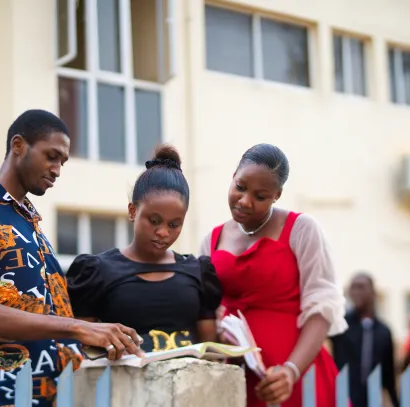
Here is what you need to know about the challenges and positive trends for higher education in Africa.
Higher education in Africa is at an important turning point, shaped by the continent’s dynamic youth population and pressing development challenges. With over 400 million young people aged between 15 and 35, Africa boasts the youngest population in the world, offering a unique opportunity to harness this potential for economic growth and innovation.
Yet, significant barriers persist, including low enrolment rates in tertiary education, inadequate alignment between academic programmes and labour market demands, and the underrepresentation of women in academia and leadership roles across African higher education institutions, particularly in Science, Technology, Engineering and Mathematics (STEM) fields.
The status and future of higher education in Africa were discussed at UNESCO’s Forum on Higher Education in Africa held in Nairobi, Kenya, in December 2024.
Young people are Africa’s greatest asset. With 75% of Africans under 35, the continent’s younger generation holds the key to unlocking significant economic growth, innovation and sustainable development – if well-educated and equipped with the right skills.
It is also estimated that between 2020 and 2040, the number of young Africans completing secondary or tertiary education is expected to double, from 103 million to 240 million.
Higher education systems must be ready to meet the growing demand for academia to drive sustainable development and economic transformation and to address pressing challenges like youth unemployment, economic inequality, and climate change. Higher education encourages innovation, research, and development in important fields like health, agriculture, and technology.
While enrolment in higher education is on the rise and more than doubled between 2000-2021 (from 4% to 9%), it is still low, at around 9%, compared to the global average of 38%.
Youth unemployment and under-employment are reaching alarming levels. Each year, 11 million African young people enter the job market but over 40% lack the skills needed for employment, pushing many into unemployment or the informal sector. More than 25% of Africans aged 15-24 are not in education, employment or training.
Gender disparities also persist, particularly in STEM fields. Additionally, underinvestment within African higher education in research and development limits Africa’s capacity for innovation, particularly in critical fields like health, agriculture, and technology. Africa invests only 0.6% of its GDP in research and development, compared to the global average of 1.79%.
With coordinated efforts, Africa’s higher education systems can become engines of growth, addressing pressing social and economic needs while fostering a globally competitive, knowledge-driven economy.
Higher education can enhance opportunities for quality jobs by aligning academic programmes with labour markets demands and fostering innovation. This particularly concerns technical and vocational education and training (TVET), which currently enrolls only 15% of African students, far below the global average.
As global challenges increasingly require local solutions, Africa’s universities and technical institutions have a critical role to play. By modernizing curricula and promoting stronger partnerships between academia and industry, higher education institutions can prepare students for jobs and entrepreneurship opportunities in emerging sectors like the green and digital economies.
UNESCO leads on initiatives to enhance the quality, inclusivity, and relevance of higher education systems across Africa. Key programmes include:
Women’s participation in higher education, and particularly in STEM fields, is vital for addressing Africa’s development challenges and ensuring gender equity, inclusive growth and sustainable development. Progress is being made: 30% of science professionals in Africa are women, and female enrolment in STEM courses is rising. Yet, more targeted efforts are needed to achieve full gender parity and ensure equitable access in higher education for all. UNESCO supports initiatives to further increase female enrolment in higher education, empowering women to contribute to innovation and leadership.

© 2025 African Higher Education